COMPREHENSIBLE MUSIC 2023-24/4 – THE MARVELLOUS GAME OF GOD

Haydn’s The Creation is one of the most important works of his oeuvre and a model for almost all late classicist and romantic oratorios. On the one hand, it retains the visual depiction of Bach’s Passions and the tradition of Handel’s jubilant, monumental choruses, but at the same time it replaces the sublime of all the works of the earlier periods with the everyday, naïve and playful. The audience will be guided through this magical game with the help of the key statements of the work.

COMPREHENSIBLE MUSIC 2023-24/3 – THE UNIVERSE OF INTIMACY

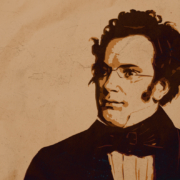
It was perhaps an irresolvable contradiction in Schubert’s art, even for the composer himself that he devoted his life to achieving success on the opera stage, but he did not succeed in it, either in his lifetime or in the judgement of posterity, mainly because of the weakness of the libretti. All the more so brilliant is his song writing and virtually all his works that are in some way connected with a song or a musical way of thinking about song writing. One of the most brilliant examples of this is the Trout Quintet, the fourth movement of which is a variation on the vocal solo from his piece entitled The Trout. The use of the bass and piano alongside the usual stringed instruments creates a work that is monumental not only in size but also in sound, yet with an intimacy that radiates from it in its every instant.

COMPREHENSIBLE MUSIC 2023-24/2 – RITE

Stravinsky’s The Firebird Suite is a landmark between the 19th and 20th centuries. In contrast to the increasingly mystified, soul-searching thinking of turn-of-the-century art, Stravinsky draws on real folklore with all its naturalness and elementarity. The Firebird is a Russian mythical fairy tale creature, whose character, combined with the Russian folk tale The Immortal Koschei, is one of the most important ballet scores of the 20th century. The concert will feature a suite written from this work, which preserves the imagery of the ballet’s concept, its most important characters and the musical phrasing of its scenes.

COMPREHENSIBLE MUSIC 2023-24/1 – THE PORTRAIT OF THE HERO

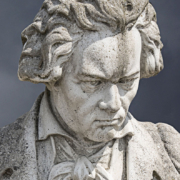
In Beethoven’s oeuvre, the notion and character of the hero, whether it’s about Napoleon or Prometheus, plays a prominent role. Beethoven’s last and perhaps most significant piano concerto is Piano Concerto in E-flat Major, widely known in the Western world by the adjective “Emperor”, which refers primarily to Napoleon, whom Beethoven worshipped for a long time. With its monumentality, the often heroic task for the pianist and, of course, with the E-flat major tone connecting it to Beethoven’s other heroic works, the piano concerto is an organic part of this cycle of thought.

DOHNÁNYI SERIES – 2023-24/5 – THE FACES OF LOVE

The emotional atmosphere for tonight’s concert will be created by four exceptional artists.

Gyula Fekete’s Cupido Symphony opens with a sophisticated harmony of romance, passion and lyricism, combining deep emotion and rich sounds. Upon the composer’s invitation, the audience will have a chance to embark on a unique musical journey.

Then we get to be immersed in the magical world of Nino Rota’s Romeo and Juliet. Rota wrote this work for Franco Zeffirelli’s 1968 film of the same title. In keeping with the Shakespearean idea that music is the food of love, Rota composed this music with love at its heart. In line with Zeffirelli’s general ideas, the composer also paid particular attention to period accuracy, which was reflected both in the orchestration and the musical style. The famous love theme evokes innocence and, at the same time, the intensity and agony of the feeling of first love.

After the interval, a stunning portrayal of passion and tragedy, Tchaikovsky’s Romeo and Juliet Fantasy Overture will bring romance to its climax. Tchaikovsky created a virtuosic portrayal of the passion and drama of tragedy; the music is full of emotion and dramatic tension. The composition displays the strong emotional states of the characters, and Tchaikovsky depicts the important moments of the tragedy in a brilliant way.

As a final chord to the evening, excerpts from Prokofiev’s Romeo and Juliet will be performed.  The composer’s musical narrative to Shakespeare’s tragedy offers sharp contrasts and a unique sound. Special emphasis is given to disharmonious elements and emotional conflicts between the characters, reflecting the musical avant-garde of the early 20th century. Prokofiev employs complex musical structures and makes creative use of orchestral tones to create a modern sound. The work reflects the composer’s openness to unusual rhythms and orchestration, expressing the musical experimentation of the time.

DOHNÁNYI SERIES – 2023-24/4 – HOMESICKNESS AND PATRIOTISM

The programme will focus on one of the most important musical works of the 20th century, Béla Bartók’s Concerto. It is an emblematic summary of Bartók’s oeuvre, and in it one can find memories of the Baroque concerto, dance melodies in various styles, lurking jazz music, as well as motifs from the oldest layers of Hungarian folk music, from mourning songs to folk dance.

The Concerto’s fourth movement is also a series of allusions. In the first half of our concert we will perform parts of musical pieces to which Bartók’s allusions are directed. The programme will also include Viktor Molnár‘s work entitled The Hunted Man, which is based on the Vidróczki Ballad. The guest of the concert will be István ‘Szalonna’ Pál and His Band, who will help us to introduce our audience to the lively and captivating relationship between Bartók and folk music.

DOHNÁNYI SERIES – 2023-24/3 – THE FACES OF TRANQUILLITY

By the 20th century, art had become a repository of ever-interchanging excitement and tranquillity, as well as new ideas that had never before been seen or heard. Tonight we pause for a moment to feel the calm and harmony that art can bring. Therefore, our concert offers works that provide moments of both tranquillity and excitement.

Starting with the more meditative type of music, Budafok Dohnányi Orchestra will first perform a work written in 2022 by Márton Levente Horváth, Erkel Ferenc Prize-winning young composer and organist. The audience will be treated to a somewhat low-spirited, original piece with a distinctive atmosphere, in which the organ, the queen of instruments, will play a leading role, with the composer’s contribution.

Schubert’s last symphony was written in the summer of 1825, after a long pause of many years from his previous symphonies. It was never performed during his lifetime. The manuscript was obtained by Schumann years after the composer’s death, and he immediately gave the score to Mendelssohn, who conducted the first performance of The Great Symphony in C major in 1839. The second movement offers an airy, floating music with a rhythmic background, sometimes dramatically coloured by livelier, louder passages, so we get both calm and excitement in this movement.

Mozart wrote the Haffner Serenade at 20 years old for the wedding of Marie Elisabeth Haffner, daughter of the mayor of Salzburg. The work was performed on the eve of the wedding and went far beyond the occasion, probably due to Mozart and his father’s long-standing friendship with the family. Tonight’s performance will showcase the last movement of the serenade, an adagio and allegro assai movement that begins slowly and calmly, then transforms into a joyful, upbeat piece of music.

The concert will be conducted by Ádám Cser who is also a composer, and the second half of the evening will start by his work about which he writes,

Symphony No.6 was composed in the spring of 2022, and its second movement – ‘Night Prayer’ – was composed in the exact week of the outbreak of the Russian-Ukrainian war. The historical event immediately ‘recomposed’ the original plans. At the time, I often found myself playing Bach’s chorale prelude 721 ‘Erbarm’ dich mein o Herre Gott’, or ‘Have mercy on me, O Lord God’ – and the chords got stuck in my fingers. The process went through fragmentation, and I embedded it in a whole new static sound cloud, a medium of harmony. The spiritual message of the movement is that upsetting the extremely fragile PEACE is so distressing that even its plea is only heard in a faltering way. It’s about a stunned, paralysed wonder at human horror.  The second half of the movement is a personal, free form with a light parlando rhythm, responding to events with attention.”

One of Wagner’s popular orchestral works, Siegfried Idyll was inspired by a more joyous event. In fact, he composed it as a birthday present for his second wife Cosima, after the birth of their only son Siegfried in 1870. Cosima celebrated her birthday on 25th December and woke up that morning to this wonderful, captivating, intimate music flooding into her room. Wagner originally wrote the piece for chamber orchestra, and for a long time it was kept secret as a family piece, not to be published. Wagner only rewrote the work for orchestra later when he was financially strapped and had to publish something; that’s how we can enjoy this work tonight.

The concert concludes with two Mendelssohn works, the first, the Noktürn movement of A Midsummer Night’s Dream, is a worthy continuation of Wagner’s Idyll. The music Mendelssohn wrote for Shakespeare’s play was first performed in 1843. In this movement, a wonderful fairyland atmosphere emerges, the forest is revealed to us, covered in moonlight, and the soothing melodies transport us to the realm of fairy tales.

The final piece of the concert is Mendelssohn’s Italian Symphony, which he completed in 1832. The work was inspired by a ten-month trip to Italy, and the composer himself described it as the most joyful composition of his life. The work has a characteristic sparkling tone, and its last movement, Saltarello, is based on the rhythm of a Neapolitan dance. This frenetic dance movement with a wild tempo brings the work and the concert to a close, in the hope that after listening to the performed pieces, the audience will return home feeling much more relaxed, calmer and at the same time more cheerful, too.


DOHNÁNYI SERIES – 2023-24/2 – LATIN VIBES

So what could be the definition of Latin vibes? Sizzling passion, blood-pumping rhythms, tense dance music, a coffee-smelling, sultry Caribbean atmosphere, with a touch of South American flair… This is what our concert today offers you: an extraordinary journey into the world of Spanish and Latin music and flair.

The first stop of our journey is Spain. Chabrier‘s work was inspired by a trip to Spain: we can almost feel the joy and happiness of the people of Aragón. Rodrigo‘s work takes us to Aranjuez, the royal residence of the King of Spain near Madrid, evoking the splendour of the place, and the romantic gardens. The heartbreakingly beautiful second movement of the piece depicts the composer’s grief after the loss of his first child, with wonderful melodies and orchestration. In the third movement, the elegance and splendour of the palace returns. From here we fly straight to Mexico. Huapango is a Mexican musical style, presented to us by José Moncayo in a giddy orchestration.

Then we stay some more in South America: Jewish-born Czech composer Erwin Schulhoff was one of the firsts to recognise the potential of jazz-like dance music in classical compositions. In his work Hot-Sonate, we can recognize the rhythms and harmonies typical of jazz music. In today’s concert, you can hear this piece of music evoking Piazzola in a superb orchestration by Balázs Horváth.

Marquez‘s music transports us to Cuba. The piece is inspired by the composer’s visit to a Cuban ball: the overflowing passion, power and joie de vivre experienced in such a ballroom will be made tangible to the audience. Tight rhythms and unadulterated Latin melodies characterise this composition, which has been a worldwide success for Gustavo Dudamel and his ensemble. And at the very end of the concert, we invite you on a trip to South America, into the Argentine countryside, ending the night’s programme with a lively dance.

BDO DAY: DOHNÁNYI SERIES – CELEBRATION

In this concert we are celebrating our 30-year anniversary. Come join us!

The overture to the programme will be two works from 100 years ago, both written to celebrate the 50th anniversary of the unification of Pest, Buda and Óbuda (thus the birth of the city of Budapest – the tr.): Ernő Dohnányi’s Festival Overture and Bartók’s Dance Suite.

Next you can listen to a virtual symphony in four movements, selected from different periods and composers in music history: the first movement is Beethoven’s Leonore Overture No. 3, which is a display of heroism. The second movement is the 3rd movement of Brahms’ Symphony No. 3, one of the most beautiful and popular pieces in music history, which exudes emotion and love. The third movement is Birthday Scherzo composed specially for the occasion by Guido Mancusi, our orchestra’s principal guest conductor, and composer. The final movement is The Throne Room & End Title from John Williams’ music for Star Wars, bringing our festive “symphony” to a close with a sense of sublimity.

Budafoki Hangversenyesték 2023-24/7

Borodin‘s opera Prince Igor will open the final concert of the 2023-24 season of the Budafok Concert Nights Series. Borodin was a Russian composer, but he also had a distinguished scientific career as a chemist. He brought to his music the musical richness of the peoples of Central Asia, sometimes seeking a bold musical language while respecting and loving classical traditions. Prince Igor is an opera in four acts, with a libretto based on the 12th-century Russian epic entitled The Lay of Igor’s Host, in which Emperor Igor II’s military campaigns against the invading Polovtsian tribes are recounted. Borodin spent almost 21 years writing the opera, but his sudden death prevented him from completing it. His friends Rimsky-Korsakov and Glazunov edited and completed the opera, which was finally premièred in 1890 in Saint Petersburg. Tonight, the overture to the opera will be performed by Budafok Dohnányi Orchestra.

Levente Gyöngyösi‘s Piccolo Concerto was commissioned by Belgian piccoloist Peter Verhoyen, piccolo soloist of the Antwerp Symphony Orchestra, in the spring of 2022. The work was recorded and released by the artist together with 3 other piccolo concertos.

The concerto consists of 4 movements: after a short, improvisatory opening movement (Rubato) with Hungarian folk influences (tilinkó, Hungarian shepherd’s pipe – the tr.), the second movement (Allegro moderato), the main focus of the work, follows in a large-scale sonata form, the musical roots of which go back not only to Hungarian folk music but also to Béla Bartók and jazz. In the short third movement (Andantino), the romantic, dreamlike atmosphere created by the harp, solo violin and flute is interrupted from time to time by the increasingly desperate, speech-like gesticulations of the piccolo. Finally, the work, which is about twenty minutes long, ends with a very virtuosic final movement (Presto), which is full of explosive energy.

The second part of the evening will feature Smetana‘s much-loved and well-known The Moldau. The Moldau is a six-part work, one of the pieces in the cycle he named “My Fatherland”, each part of which is a symphonic poem with a programmatic title. Smetana composed the work between 1872 and 1879, inspired by his love of the Czech nation’s past and the beauty of the Czech landscapes, and dedicated it to the city of Prague. The Moldau is the most frequently heard section of the entire composition, depicting the journey of the River Vltava (Moldau in English – the tr.) from its source to the Czech capital, while we witness various events taking place on the banks of the river: a hunt in the forest, a country wedding, and the dance of fairies in the moonlight.

The final work of the concert is a piece written for a pantomime play by the namesake composer of the orchestra, Ernő Dohnányi. The Veil of Pierette is based on Arthur Schnitzler’s play of the same title, which tells the dramatic story of a love triangle that unfolds from a wedding night with a bride running away to her lover, the emptying of a poisoned chalice, the ghost of a dead lover, and finally the bride driven mad by what has happened and what she has lost. The work was premièred in Dresden in 1910, and in the same year at the Budapest Opera. It is with a version of the Suite from The Veil of Pierette that Dohnányi Orchestra Budafok, conducted by Levente Török, will bid farewell to the audience at the end of the season.