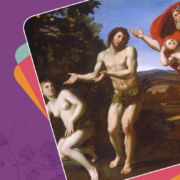
ZEMPLÉN FESTIVAL – COMPREHENSIBLE MUSIC

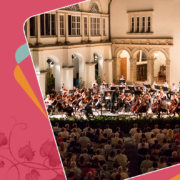
Haydn‘s travels in England introduced him to the local musical scene, and he was present in the performances of several Handel works, including oratorios. He was fascinated by Handel’s oratorios and, although he had written a few before, the use of the chorus, the orchestra, the choir and the solo voice to dramatic effect was a new experience for him. Peter Salomon, the organiser of Haydn’s first trip to England, showed him a text by the poet Thomas Linley (1733-1795) entitled The Creation of the World, based on John Milton’s Paradise Lost. Handel had already been given this text, but he found it too meticulous and detailed, so he ignored it.
Haydn, on the other hand, was captivated by the detailed natural imagery and took it back to Vienna with him. There, Baron Gottfried van Swieten, diplomat, literary man and a central figure in Viennese musical life, translated it into German and added a few psalm quotations. Its first performance outside Vienna took place on 8 March 1800 in Buda, conducted by Haydn, as part of the wedding and birthday celebrations of Palatine Joseph and Alexandra Pavlovna Romanova. The play was so popular in Hungary that in 1820 a street was named after it – mistakenly translated as “Alkotás” (meaning “artwork”) in Budapest.

The musical work consists of 34 movements in all and it employs three vocal soloists (soprano, tenor and bass) and a full mixed choir. The first part is about the first four days of creation, the second about the fifth and sixth days, while the third part is about the first human couple, Adam and Eve.

Admission to the concert is free!
ZEMPLÉN FESTIVAL – THE CARNIVAL OF THE ANIMALS

While the motifs of The Carnival of the Animals ring in all our ears, by its sophisticated wit, the piece never fails to surprise us. This time, the music of Saint-Saëns is complemented by works of Rameau, Bartók and Rimsky-Korsakov, the themes of which fit in well with the programme.

However, the musical surprises are enriched by a literary experience that is no less frivolous, as contemporary Hungarian poet and writer János Lackfi will be reading his poems written for this musical piece, giving a voice to the main characters in it – chickens, swans, mules – or even pianists.

The amazing behaviour and appearance of animals is a magnificent picture of the Creator’s inexhaustibly playful spirit. A fantastic German theologian, Johannes Hartl, said that if he were God, he would have created two kinds of fish: a goldfish, which is really beautiful, and a grey, cubic, boneless fish, because it is easier to slice. Notwithstanding all of that, there are clownfish, seahorses, sharks, whales and even platypus happily swimming about in the depths of the sea. It was great fun to come up with a nice, witty, even naughty phrase for each of the animals in Mr Saint-Saëns’ menagerie. To play with the strength of the kangaroo that crumples an iron bucket, the beautiful aggressiveness of the swan, the fierceness of the lion that became vegan, the cumbersomeness of the elephant that staggers around a china shop, the slyness of the slow-motion turtle, the leaps of the rushing antelopes, the strange monster grimaces of aquatic animals, the obsession of the competing poultry picking the worm apart… And now we’ve added Rimsky-Korsakov’s maddening bumblebee, Bartók’s fly entangled in the net and his dancing, smelly bear, or Rameau’s silly hens. At the gala performance of the Cziffra Festival, at the Liszt Academy, the production was a roaring success, and now we’ve tweaked it a couple more. At times Gábor Hollerung gave me the task of almost being a soloist, I had to be very alert to step in on time and feel the beat. That’s why there’s quite some jitters in the story.” – this is what János Lackfi wrote when asked what inspired him to write the lyrics.

In addition to the usual high quality of interpretation by Budafok Dohnányi Orchestra, we can also enjoy the fascinating play of Kossuth Prize-winning pianist János Balázs.

ZEMPLÉNI FESZTIVÁL – Szabad egy bécsi táncra?

Josef Strauss – Sphärenklänge Walzer
Josef Strauss – Stiefmütterchen (Árvácskák) Polka française
Ifj. Johann Strauss – Myrthenkränze (Mirtuszkoszorúk) Walzer
Id. Johann Strauss – Sperl Polka française
Mancusi – Am Stadtpark (Városligetben)Walzer
Mancusi – Ganz Neue Pizzicato Polka française
Mancusi – Running Sushi Polka

ZEMPLÉN FESTIVAL – OPENING CONCERT

This year’s OPENING CONCERT of the Zemplén Festival will feature a Hungarian programme performed by Budafok Dohnányi Orchestra, proudly playing works by two contemporary Hungarian composers who are also members of BDO.

The first movement of Symphony No. 1, entitled “Szerelem” (Love), by Levente Gyöngyösi, BDO’s resident composer, will be performed, depicting the joy and the subtle shades of a happy love in the composer’s usual enjoyable and accessible musical language.

Pianist and composer Apor Szüts is also a member of BDO, and his work is based on a French folk song known in Hungary as “Pál, Kata, Péter”. The work is a lavish, playful set of variations for piano and orchestra.

In the second half of the concert, two outstanding works of Hungarian music history will be performed. Béla Bartók’s Dance Suite, written just over 100 years ago, is the first to show the solidarity of the people of the Carpathian Basin. Kodály’s Dances of Galánta will be a special performance in which a folk orchestra made up of members of the orchestra will also play the original folk music on which the piece is based.

CINEFONIC – ZEMPLÉN FESTIVAL

The film music concerts of Budafok Dohnányi Orchestra are always very popular and well attended. CINEFONIC offers its audience excellent film music, cinematic imagery, Gábor Hollerung’s delightful introduction and suggestive conducting, in a fully entertaining summer evening, this time at the Tokaj Festival „Hollows” (Open Air Theatre). BDO will present a selection from the best of the film music literature, with music from the latest blockbusters alongside the evergreens.

ZENEPLUS SERIES: WEBBER/BERNSTEIN

The Budafok Dohnanyi Orchestra’s next concert in the series offers the audience two outstanding works from the second half of the 20th century – with the Budapest Academic Choral Society joining them on the stage and the BDO’s first guest conductor, Guido Mancusi, taking the podium.

West Side Story requires no introduction. The cult musical takes place on the Upper West Side of 1950s New York. The plot is based on Shakespeare’s Romeo and Juliet, but instead of focusing on two feuding families, here the conflict is between two teenage street gangs of different ethnic backgrounds. Although constraints of time and scope mean that Leonard Bernstein’s musical cannot be performed in its entirety at this concert, the virtuoso orchestral suite Symphonic Dances from West Side Story offers a complete picture of all the musical layers of the original work. Featured in these popular excerpts will be many familiar sounds, ranging from cool jazz to Latin American ballroom dance and classical music almost reminiscent of Stravinsky. The second half of the concert features Andrew Lloyd Webber’s Requiem, which the composer known primarily for his musicals wrote in memory of his father. Reluctant to continue the modernist trend of the 20th century in this work demonstrating once again the versatility of his talent, Lloyd Webber instead drew inspiration from the English church music tradition, as well as from Fauré’s Requiem and Orff’s Carmina Burana. The Requiem’s natural melodic world, colourful orchestration and lively rhythms demand no detailed commentary. Bearing special mention, however, is the Pie Jesu movement, a duet between a female and boy soprano joined by the choir that became a hit in its own right, independently of the rest of the composition.

MUSICPLUS SERIES – Les Liaisons dangereuses

What we are offering here is theatre. But in this dramatic musical theatre production supplemented by dance, there is much more emphasis on the music than in a standard theatrical performance.

We have selected excerpts from a wide variety of genres from the vast palette of Mozart’s oeuvre. Symphonies, divertimentos, masses, serenades, concertos for various instruments, organ fantasies and, of course, several opera excerpts. The pieces of music are played to add certain colours under the text and are intended to support the various dramatic situations, with some of them emerging into the foreground in their own right or even providing the basis for Yvette Bozsik’s choreography in certain scenes – since dance and movement will also be important elements of the production. The artists of the Yvette Bozsik Company, which, like the orchestra, is also turning 30 this year, play the butlers and maids who rush around the protagonists and know all the secrets those gentlemen and ladies are keeping. Nóra Árva, a regular creative partner of the Budafok Dohnanyi Orchestra, is using her usual taste and sense of proportion to create the sets and costumes that make up the distinctively modern rococo milieu in which the characters exist. Playing under the baton of Gábor Hollerung, the BDO will provide the entire live musical foundation. The key factor that promises to make the production a success, however, is the casting of some of the most outstanding artists from the Hungarian theatre world to portray the exciting and complex characters dreamed up by Choderlos de Laclos. The directing by Gábor Bakos-Kiss builds up this extremely diverse material in a way in which this familiar story has never been staged before.

ZENEPLUS SERIES: Myths and Gods – The storehouse of memory

This concert by the Budafok Dohnanyi Orchestra offers some insight into the world of myths. The first part kicks off with the cult music of a modern myth, which draws a great deal from the composers appearing in the second part of the concert, Wagner, Mahler and Holst, while remaining at the same time, a modern interpretation of an ancient mythical story.

In the second part of the evening, the Ballet Company of Győr presents a dance drama titled Game of the Gods. Also based on myths, this work choreographed by László Velekei centres on the idea that for deities unexposed to the finite nature of existence, life is merely a game with no real stakes. Although their faults, virtues and characters are very human, no shadow of finiteness or irreversibility is cast on their fights, loves and quarrels. Perhaps this is why the tragedy-laden world of mortals does not affect them either: for them, it is merely a matter of collateral damage. For the most part, they live their capricious lives in the comfort of immortality, ignoring us mortals and instead creating the confusion, traumas, cataclysms and beauties of life on earth. But let us not forget that the gods were the product of man’s imagination. They exist in order to explain the existence of the world. Therefore, when they leave us, does this not mean that we ourselves are breaking away from the essence of creation? Was it not in order to preserve for us an important slice of the world we considered valuable that we made them immortal?

MUSICPLUS SERIES: Händel: Messiah

Handel’s Messiah is perhaps the most famous piece in the oratorio literature. In the British musical tradition, this Handel work is considered ‘The Oratorio’, and its Hallelujah is almost the second hymn of the British people, which is still heard standing up at concerts to this day. The composition of the work, like that of many other oratorios, has undergone numerous changes over the centuries; certain movements have been played frequently, while others have been omitted. Some arias have been transposed in different forms. The performing apparatus of the work has also greatly varied: from very small orchestras to monumental productions involving about a thousand performers, it has been played in almost every possible variation.

To this day, there are two widely known and frequently performed adaptations of Messiah. One is by Mozart and the other was written in the 1950s by Sir Eugene Goossens.

BDO has played both adaptations. Mozart’s version, which is not only rearranged but also a version with abridgements, seeks to enrich Handel’s simple orchestration, while Goossens seeks to bring the over-abundant “mega-orchestras” of the 19th-20th centuries closer to the original Handel oratorio.

BDO and Müpa Budapest’s joint MusicPlus concert takes as its starting point the Mozartian orchestration and movement composition. The performance retrieves a single movement from the original Handel version, “If God be for us…”. The version to be performed was originally written for the German translation, but BDO retains the original English text in its performance, offering a more comfortable concert experience for both performers and listeners.

One of the special features of the concert is that it presents four extremely talented young Croatian soloists, who were discovered by Gábor Hollerung, the conductor of the evening, during the course of their collaborative work on a concert at the Vatroslav Lisinski Concert Hall in Zagreb in the spring of 2023. Gábor Hollerung is known for his commitment to promoting young talents, so it is not surprising that he has chosen this way to launch the international careers of these four young singers.

Another special feature of the concert is that, following the principle of the MusicPlus series, a complex artistic performance will be created by adding a sister art to music. On this occasion, the visual energies of the audience will be engaged by a slide show of artworks matching the theme and the music, which will be projected during the performance, complementing the music and offering an even more complete experience.

COMPREHENSIBLE MUSIC 2023-24/5 – GOD IS NOT DEAD

The relationship between Richard Strauss’s symphonic poem and Nietzsche’s work that served as its origin is one of the most complete, controversial and theoretic relationships in the history of music. This concert seeks to clarify the real nature of the connection between the two works, while interpreting and earning due appreciation for Strauss’ work as one of the most important compositions of the turn of the century.