
Composers of our times often draw inspiration from the work of earlier masters. In today’s concert, we are going to perform three works that consciously or unconsciously evoke the musical style of the great classics.
Máté Bella‘s work is an exciting encounter of old motifs and elements of modern minimalist music. The piece clearly follows the tradition of the baroque concerto grosso, but in a modern, 20th century guise, with repetitive musical elements. The final movement (Death Dance) may bring to mind the summer storm of Vivaldi’s Four Seasons, but the mood of the Death Dance is underpinned by the ominous theme of the Dies irae melody.
Richard Strauss‘ Oboe Concerto is a late work of the composer. He declared that he considered his works written after the Capriccio to be “wrist exercises”. Apparently, the Oboe Concerto is also such a wrist exercise, for a small apparatus, with a translucent orchestration, recalling Mozart in both its melodic and playful nature.
Brahms‘ Piano Quartet is one of the gems of chamber music literature. We Hungarians are particularly fond of the fantastically drifting Rondo alla Zingarese, the final movement that was written in the style of gypsy music, which was considered typical Hungarian at the time. All in all, by its musical and emotional dimensions, this work surely belongs in the category of symphonies. Perhaps this is what Schoenberg felt, too, as he was making the orchestral transcription. He jokingly remarked that with the transcription he had in fact created Brahms’ Fifth Symphony.
SACRUM ET PROFANUM
Missa brevis by Apor Szüts is an interesting attempt to combine virtuoso romantic music with the ethereal choral music of the 20th and 21st centuries, guaranteeing a unique experience for both performer and listener. The composition follows the classical structure of the Mass: Kyrie, Gloria, Sanctus, Benedictus, Agnus Dei. The Kyrie is the centrepiece of the work, with its theme recurring in a rondo-like manner, linking the movements and concluding the work at the end of the Agnus Dei. The Credo is replaced by Schubert’s song Doppelgänger, at the dramatic middle and low point of the piece. The song has the same structure of dramaturgy as the Mass itself: it starts in a domed structure from nowhere and continues into nowhere, like a little “doppelganger”.
In the second half of the concert, Beethoven’s Symphony No. 4 will be performed: a musical work with an unusually serene tone, reflecting the composer’s general mood at the time. According to a friend, Beethoven was in a ‘jolly, lively, vivacious, fun-loving mood’ at the time, and his Symphony No. 4 spreads the same spirit. According to Robert Schumann, it is Beethoven’s most romantic symphony, a tribute to his love for Josephine Brunsvik.

A New Year’s concert full of surprises

Tonight, Budafok Dohnányi Orchestra will try to evoke the Christmas atmosphere with orchestral works written for strings.
The first piece is by young Hungarian composer Bence Kutrik, and its tone is very akin to folk music. The title of the work – Adventus – means ‘coming’, referring to the event of Jesus’ birth. Advent is the season of expectation or waiting with which people can prepare to receive the coming of the Nativity, therefore we perform this piece at the start of our Advent concert.
Next you will hear two string concertos by the Italian Baroque composer Antonio Vivaldi. Most people know Vivaldi for his Four Seasons, but he left behind a vast oeuvre of works, including hundreds of string concerti. There are no soloists in tonight’s works, instead, the two violin sections compete against each other. Both are three-movement, true Italian Baroque works of music evoking the peaceful atmosphere of Christmas.
The final piece of the first half of the concert is the Adagio by American composer Samuel Barber. The work was composed during Barber’s stay in Rome in 1936, where he spent an extended period of his studies. It was here that he met conductor Arturo Toscanini, who conducted the première of the work two years later. Adagio was originally the second movement of a string quartet, but Barber rearranged it for orchestra in January 1938 and sent this version to Toscanini, who gave a first performance of the work that same year. Adagio is an emotional work, rich in lyrical melodies, which has moved many people to tears. In spite of this, or perhaps because of it, it has become a very popular piece, and has been used as incidental music for several films.
Finally, our Advent concert will conclude with Dvorak’s Serenade for Strings, inviting us to a colourful dance scene with vibrant and emotional music ranging from waltzes to village dances.
Franz Schubert composed his first opera at the age of seventeen. The Singspiel in three acts entitled Des Teufels Lustschloss (The Devil’s Pleasure Palace) was based on the libretto by August von Kotzebue. Oswald, the protagonist of the story, is called upon by his future father-in-law to perform various tests to prove that he is worthy of his lover’s hand. Oswald successfully passes the trials and so the opera has a happy ending. The first version of the work was completed in 1813 in less than six months, and it is said that Schubert did not attend his music lessons while he was working on the opera. It was only when he could show the finished work that he returned to his teacher, Antonio Salieri, who, although he resented the six-month absence, was willing to review the opera. Probably taking his teacher’s advice, Schubert revised the opera, and the new version was completed by 1814. However, the work was only premièred in Vienna in 1879 – more than 50 years after the composer’s death. To be performed tonight is the Overture, which is still the most popular and most performed part of the opera.
Beethoven, the third great figure of the Viennese Classical period after Haydn and Mozart, was more popular as a pianist than as a composer. Of his five piano concertos in total the first three were written in his early period, and still show the strong influence of Mozart and Haydn. Piano Concerto No. 3 is the only one of his piano concertos to be written in a minor key, what’s more in C minor, which was a tragic key for Beethoven from the beginning of his career. The concerto opens with an Allegro con brio, that is, a lively first movement, in which the strings immediately introduce the main theme. The piano will respond, and this exchange will continue, meaning that the orchestra will not merely accompany, but enter into and remain in dialogue with the piano almost as equals. This will be followed by a lyrical middle movement in E major, almost imperceptibly transitioning into the final movement, which ends in carefree merriment.
Mozart completed his Symphony in D major at the end of 1786, shortly before his trip to Prague, and it was premièred in Prague early the following year – that’s why the epithet ‘Prague’ was later attached to the name of the symphony – and it was a roaring success. Mozart himself conducted the concert and played the piano part. The trip to Prague was successful not only because of the performance of the symphony, but also because it was there and then that Mozart was commissioned to write Don Giovanni, in which the atmosphere and motifs of the Prague Symphony are detectable through and through. It is a work in three movements, and Mozart omitted the minuet movement because he knew that the people of Prague were used to symphonies without it. The D major key is one of brilliance, splendour and cheer. The first movement, Adagio – Allegro, is more voluminous than is usual for symphonies, followed by a sinister yet lyrical Andante movement, and then a moving, excitement-filled, more relaxed Finale, Presto movement concludes the work.

A Russian evening with three Russian composers
Our concert begins with the overture to the opera by the youngest of the featured composers, Dmitry Kabalevsky. Written in 1937, it is based on a novel by Romain Rolland. The opera’s title character, Colas Breugnon, is a master carpenter and woodcarver living in a small 17th-century French town, content with his daily life, enjoying every moment and all pleasures of it. His tranquil life is shattered when he loses his wife to the plague, falls ill himself, and in his absence his house is burnt down, his possessions are looted and his works destroyed. The town where he lives falls into the hands of robber gangs and anarchy prevails everywhere. Finally, Colas is the one to brings order to the city and organise the locals’ life again. While building his new house, he breaks his leg and is permanently forced to bed. But this does not dampen his spirits; he passes the time reading Plutarch. Colas is the type of man who never loses his zest for life, who comes out of every trial and loss stronger than ever. Kabalevsky did thorough research to include French and Burgundian folk songs in his music. The overture is the most frequently performed part of the opera, a musical expression of the protagonist’s vitality, humour and wisdom.
In the early 1930s, Prokofiev entered into a creative crisis. The problem that preoccupied him most what kind of music he should write that the audience of his day would be pleased with. One of his most important conclusions was that melodic music was the best way to bring contemporary music closer to the audience of the time. So when in 1935 the French violinist Robert Seutance asked Prokofiev to write a violin concerto, he reached back to traditional forms and put melody first. His Violin Concerto No. 2 blends classical tradition with the innovations of his new artistic period. Tradition is well reflected in the concertante relationship between violin and orchestra, the three-movement fast-slow-fast form, the harmonies and the orchestration. Prokofiev’s motives colour this traditional sound and make the Violin Concerto No. 2 an exciting work of music.
In the second half of the evening, Symphony No. 5 by Tchaikovsky, the most prestigious of the three composers, will be performed. The work was composed in 1888 and, although it received mixed reviews when it was premièred, it has become the composer’s most popular and most performed work. It can be considered a symphony of fate, with no precise programme, but the composer himself wrote this comment on the work: “Complete resignation before Fate, or, which is the same, before the inscrutable predestination of Providence…”. The opening theme represents this idea and recurs in each movement as a reminder, even though each movement has its own musical theme. It is a large-scale work with a sombre mood, which still ends on a hopeful note.
Budafok Dohnányi Orchestra will give a charity concert in support of the Foundation for Pulmonary Medicine, which has been operating for almost 30 years and was established to support Korányi National Pulmonary Institute. The Institute is a renowned centre for pulmonary medicine in Hungary, with unparalleled merits in the prevention and treatment of respiratory diseases, as well as in related research and education. The Foundation contributes to supporting the quality of the outstanding professional work carried out at the Institute and to improving the working environment and conditions.
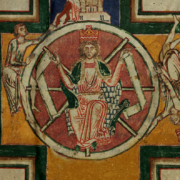
The concert will feature Carl Orff’s work, which was premièred in Frankfurt in 1937 and has enjoyed unbroken popularity to our days. Following in the footsteps of Stravinsky, through its exciting musical barbarism Carmina Burana takes the listener into a world of student songs proclaiming the fleeting fortune and fleeting love. The songs are taken from a medieval German codex found in the 19th century in the monastery of Benediktbeuren. They exhibit a peculiar ‘carpe diem’ spirit but also some moralising, delivered in sometimes gentle, sometimes humorous, sometimes lyrical tone, that eventually turns to obscenity or mischievousness.
From the abundant material Orff chose a poem on the vicissitudes of fortune (O Fortuna) to be the motto of his work. The cantata-like composition then continues with poems about the awakening of spring and young people playing happily in the spring meadows. The second part is subtitled “In taberna” – in the tavern. The drunken priest appears on the imaginary stage (the short movement is an actual Gregorian parody), and then begins an amusing list of whoever drinks and however they drink (making a summary, too: “a hundred drink, a thousand drink…everyone drinks immoderately and immeasurably”). The third part is about love, including some racy, erotic lines here and there. Finally, the motto-like “O Fortuna” makes a return.
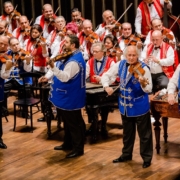
Our audience is invited to join us for an exciting musical journey, made truly unique by the fusion of classical music and gypsy music. Virtuosity and vibrancy – the trademarks of both the 100-Member Gypsy Orchestra and Budafok Dohnányi Orchestra – merge at the climax and will surely captivate the listener.
Róbert Lőrinc Danyi, the new leader of the 100-Member Gypsy Orchestra, will make sure to offer a worthy presentation of both the long well-known orchestra and Hungarian musical tradition. The orchestra’s world-renowned artistic and traditional practices have earned it a place in the “Collection of Hungarikums” (thereby representing the high performance of Hungarian people thanks to its typically Hungarian attribute, uniqueness, specialty and quality – the tr.). With its unique size and stage presence, the 100-Member Gypsy Orchestra is guaranteed to be a success at home and abroad.