Heroes and Lovers – Musicplus 1.

“The two most important elements of this concert programme, the prelude and Isolde’s Liebestod from Wagner’s Tristan und Isolde and Strauss’s symphonic poem Ein Heldenleben, attempt to capture a sense of cosmic beauty. This beauty cannot avoid the decadence of the artistic outlook of the era. The musical thinking behind Wagner’s Tristan und Isolde is essentially a succession of harmonic sequences that almost never reach a resolution. Ein Heldenleben marks a certain turning point in the output of Richard Strauss. Here, the ‘hero’ is not necessarily a leader figure who stands out from his community, but is instead his equivalent in moral terms and, in relation to this, the embodiment of man-made beauty. Enhancing this concert will be the visual world designed by Viktória Nagy.” (Gábor Hollerung)

Comprehensible Music 24-25/5 – THE APOTHEOSIS OF THE RITE

Stravinsky’s work is a genre-, style- and mind-setting work of the twentieth century. Although he often transgressed or even denied the spirit of this work in his later oeuvre, the ‘Sacre’ remains one of the most powerful, surprising and diverse piece of all of his music to date. All Stravinsky’s musical tools are derived from classical music, only he is quite savvy in his treatment of the harmonies, rhythm and the articulation mechanisms that are customary in classical music. And yet the combination of a monumental instrumentation and a strong, captivating, almost ritualistic folkloric colouring is guaranteed to keep the listener on the edge of their seat.

Comprehensible Music 24-25/4 – THE SPIRIT OF BACH

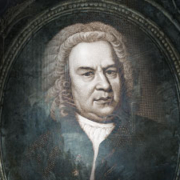
It is commonly believed that Bach was rediscovered by Mendelssohn, and with his performance of the St. Matthew Passion in 1829, he launched a new cult of Bach. This was not in fact the case. Bach has always been present in the lives of every generation after him as the greatest composer. The most important intention of the Bach cult initiated by Mendelssohn was to perform Bach’s works in the style and instrumentation of the period they were written in. Yet perhaps no other composer has ever been as influenced by Bach as Mendelssohn: almost all his works reflect the spirit of his great predecessor to a greater or lesser extent. Furthermore, Mendelssohn’s Lobgesang is one of the best-known examples of the post-Bach tradition of Protestant music. The work, which the composer describes as a symphony, actually consists of an orchestral introduction (Movements 1-3) and a major oratorio movement (Movement 4 Finale), and it was written to commemorate the 400th anniversary of the invention of the printing press. The whole work is a true ‘hommage à Bach’.


Comprehensible Music 24-25/3 – SYMPHONIC CHAMBER MUSIC

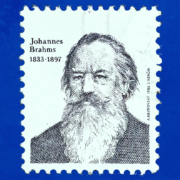
Brahms’ Piano Quartet is one of the gems of chamber music literature. We Hungarians are particularly fond of the fantastically drifting Rondo alla Zingarese, the final movement that was written in the style of gypsy music, which was considered typical Hungarian at the time. The work is also special because within the category of Romantic chamber music it belongs to a subgroup often referred to as symphonic chamber music, as it is characterised by the creation of an almost symphonic sound by the four instruments. All in all, by its musical and emotional dimensions, this work surely belongs in the category of symphonies.

Megérthető zene 24-25/2


Comprehensible Music 24-25/2 – ORIENT AND OCCIDENT

The culture of the East has always been a great inspiration for Western art, and the same is true for music. Starting from Mozart through Rimsky-Korsakov, Grieg and Tchaikovsky to Bartók, there has been a lot of very interesting music written with a recognisable and palpable oriental flavour. Of course, this music is always very far removed from the real oriental world of melodies. The focus of the concert is on Nielsen’s Aladdin suite, which is not real oriental music either, but which, with its musical and dramaturgical ideas, transports us into the world of the tales of The Thousand and One Nights.

PASSION AND EROTICA – DOHNÁNYI SERIES 24-25/6

What is passion? In almost all European languages, the origin of the word is related to the word for suffering. Whether it is passionate love, passionate hatred, passionate interest, or a passionate inquiring mind, one thing is certain: passion compels, inspires and sometimes it causes truly nerve-wracking suffering. It is this overwhelming, overriding feeling that we will try to express in music in our concert today. We present the faces of passion, whether it be softly lyrical, romantic, poignantly painful, invigorating or even captivatingly sensual.

VOICES FROM THE PAST – DOHNÁNYI SERIES 24-25/5

Dávid Mester: Voices from the Past
‘The main idea behind my overture for symphony orchestra entitled Sounds from the Past is to evoke the spirit of Bartók and Kodály in its gestures, the sounds of revolution, with the final triumph of the Hungarian folk song. Taking up a bridge pattern, the composition aims simultaneously to look back on the past century, creating sounds that feel nostalgic, and to appeal to the man of today – with a touch of cinematic overtones – and, in its occasional or grotesquely humorous passages, a light-heartedness and sparkling scherzo character.’ (Dávid Mester)

Bach– Stokowski: Chaconne
Bach’s Chaconne is a cosmos enclosed in a solo violin, so no one has been willing to consider it a solo piece for centuries now. Many composers have tried to write the accompaniment which was thought to be lost. Stokowski’s arrangement is the one that stands out among these attempts, because its monumental orchestration makes the universe of Bach’s music comprehensible and accessible to the man of the modern world.

Bruckner: Symphony No. 6
Bruckner is the most conservative composer of late Romantic music. He expanded the classical sonata form both in time and in musical thought. But the roots of his music go deep, back to the Viennese Classics.

AHOJ! – DOHNÁNYI SERIES 24-25/4

Tonight, our audiences will hear a selection of music originating from our northern neighbours. Vítězslav Novák is a Czech composer who worked in the first half of the 20th century. His works bear the marks of late romanticism, but he was also influenced by folk music. His Slovak Suite was inspired by a journey through Slovakia and consists of five movements depicting Slovakian landscape and life. The musical journey takes us first to a Protestant church service, then out of the church to witness the joyful play of children. Walking further into the village, we can follow a couple in love, and then join a dance. As night falls, the lovers appear again, gently cuddling in the sunset.

Petr Eben is one of the Czech Republic’s leading contemporary composers. He wrote his huge one-hour organ concerto back in his youth. In terms of genre, the work is a synthesis of a concerto and a symphony, as reflected in its title: Symphonia gregoriana. The work is based on a Gregorian melody, the Litany of the Saints on Good Friday, which will be heard in the second movement performed tonight.

Smetana’s symphonic poem My Homeland is one of the most popular pieces of music literature, in which the composer depicts Czech landscapes and mythological and historical events. Today, you can hear two excerpts from it: one that takes us to Tábor, the former centre of the Hussite movement, and the other that takes us to Mount Blaník. Legend has it that the Hussites are asleep in the caves of Blaník, waiting for their homeland to call them. The end of the movement heralds a glorious future for Bohemia.

Josef Suk’s symphonic poem Prague will also be performed, exploring the mysterious world of the composer’s beloved city. First the Vltava River appears in the morning mist, and then the ancient fortress of Vyšehrad looms up, a reminder of the city’s glorious past. Although the glorious tone fades for a moment in remembrance of more turbulent times, the piece ends with a jubilant, triumphant theme.
 

MOZART FOREVER- DOHNÁNYI SERIES 24-25/3