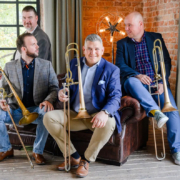
BDO DAY– BRILLIANT BRASS – A CONCERT BY THE LISZT PRIZE WINNING CORPUS TROMBONE QUARTET

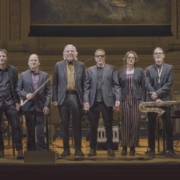
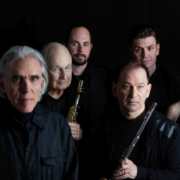
On the afternoon of BDO Day, the pride of the BDO will be presented, as is now a tradition. This year, the recent Liszt Prize winner, Corpus Trombone Quartet will give a sensational concert. The Quartet was founded in 2001 and over the past 23 years has achieved great success in international competitions, toured on several continents and is a regular performer on the Hungarian music scene. All full-time members of the Budafok Dohnányi Orchestra, the current members of the Corpus Trombone Quartet are: András Sütő, Péter Pálinkás, Olivér Gáspár and Gábor Hegyi.

In today’s concert, they are joined by their friends and colleagues for a programme that spans the ages and genres, with brasses, the organ, folk instruments and symphony orchestra. Their programme is eclectic, with arrangements for trombone ranging from Corelli through Bartók to Queen.


BDO DAY – The Music of the Thousand and One Nights – a musical fairy tale

The Music of the Thousand and One Nights

Or: what happens when a doormat to be thrown away suddenly speaks out and begs for mercy on dump day.

With the help of a slightly conceited and cheeky magic carpet BDO will transport us to the evil sultan’s realm, where our heroes are in for a dizzying and extremely dangerous adventure.

Musical excerpts evoking the magical Orient have been selected from works by Rimsky-Korsakov, Saint-Saens, Verdi, Ippolitov, Nielsen, Khachaturian and Mussorgsky.

The concert is recommended for children over 5 years of age.

Conducting Masterclass Gala Concert

For the fifth time, the Dohnányi Academy is organising its Conducting Masterclass, during which conductors from all over the world will develop their skills under the guidance of the Master Class Director, Gábor Hollerung, and with the contribution of BDO. Participating conductors will have the opportunity to present what they have learnt in a concert at the end of the Masterclass.

The Wooden Prince was perhaps the first work in Bartók’s oeuvre that found its way to a wider audience. It also stands for an important final moment in the Romantic period, as it is perhaps the last one in the series of preceding and successive theatrical works in which the composer was able to formulate an organic ending that evokes a positive feeling in the audience. Just as Bartók’s Bluebeard articulates the irresolvable difference between man and woman, and the universal, eternal darkness of their relationship, so in The Wooden Prince the sacrifice and renunciation for each other resonates in the hope for a happy love. Today’s concert features the suite by Bartók.

Grieg, the best-known composer of Scandinavian national Romanticism, composed his Piano Concerto in A minor, one of the most popular pieces in the Romantic concerto literature, in 1868, when he was only 25 years old. The concerto is often paired with Robert Schumann’s Piano Concerto in A minor, which also has three movements. Moreover, Grieg was actually familiar with Schumann’s work. Besides Schumann’s music, Grieg was inspired by Norwegian folk music during the composition of the concerto, and imitations of Norwegian folk dance and folk musical instruments can also be found in the piece.

Today’s concert will end with one of Beethoven’s best-known works, Symphony No. 5, the opening motif of which was commented by the composer himself as follows: ‘This is the sound of fate knocking at the door’. The symphony itself depicts the desperate struggle of man and the ultimate triumph of human will.

Philip Glass, Godfrey Reggio: Naqoyqatsi – Erőszakos világ (2002)

After the success of Koyaanisqatsi, the American director Godfrey Reggio set out on the task of creating the rest of the Qatsi Trilogy. The titles of each of the three films are words borrowed from the language of the Hopi Indians. Although the works involve no plot or speaking, the music by Philip Glass is equal in importance to the visual sequences that it closely tracks. Powaqqatsi (Life in Transformation, 1988) depicts the disappearance of ancient cultures, and Naqoyqatsi (Life as War, 2002) illustrates the alienating effect of modern technologies on society. During the screening of the latter film, the music will be performed by the Philip Glass Ensemble in a new arrangement created by the composer especially for this occasion, with cello soloist Dániel Helecz and the Budafok Dohnanyi Orchestra also taking part.

This new arrangement of the piece was commissioned by the Ravenna Festival, Ireland’s National Concert Hall, the Barbican Centre and Müpa Budapest.

Philip Glass, Godfrey Reggio: Koyaanisqatsi – Life Out of Balance (1982)

It was in 1982 that the experimentally minded American director Godfrey Reggio created his film Koyaanisqatsi, which went on to gain cult status among audiences receptive to new concepts. In the language of the Hopi Indians, the word means ‘Life Out of Balance’ – which, translated into various languages, was the title used when it was distributed in Hungary and other countries at the time. The work suggestively depicts the absurdity of modern societies turning away from nature and the ancient balance of life – with neither plot nor text, but accompanied by the music of Philip Glass, which is an inseparable part of the work. The Müpa Budapest audience will now get to see and hear all this in an authentic performance by the Philip Glass Ensemble, with the Cantemus Mixed Choir, the Budapest Academic Choir Society and the Budafok Dohnanyi Orchestra also taking part.

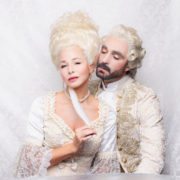
Les Liaisons dangereuses

What we are offering here is theatre. But in this dramatic musical theatre production supplemented by dance, there is much more emphasis on the music than in a standard theatrical performance.

We have selected excerpts from a wide variety of genres from the vast palette of Mozart’s oeuvre. Symphonies, divertimentos, masses, serenades, concertos for various instruments, organ fantasies and, of course, several opera excerpts. The pieces of music are played to add certain colours under the text and are intended to support the various dramatic situations, with some of them emerging into the foreground in their own right or even providing the basis for Yvette Bozsik’s choreography in certain scenes – since dance and movement will also be important elements of the production.

The artists of the Yvette Bozsik Company, which, like the orchestra, is also turning 30 this year, play the butlers and maids who rush around the protagonists and know all the secrets those gentlemen and ladies are keeping. Nóra Árva, a regular creative partner of the Budafok Dohnanyi Orchestra, is using her usual taste and sense of proportion to create the sets and costumes that make up the distinctively modern rococo milieu in which the characters exist. Playing under the baton of Guido Mancusi, the BDO will provide the entire live musical foundation.

The key factor that promises to make the production a success, however, is the casting of some of the most outstanding artists from the Hungarian theatre world to portray the exciting and complex characters dreamed up by Choderlos de Laclos. The directing by Gábor Bakos-Kiss builds up this extremely diverse material in a way in which this familiar story has never been staged before.

BDO-DAY – DOHNÁNYI SERIES 24-25/1

In keeping with our tradition, the evening concert of this year’s BDO DAY will feature a diverse line-up: a complete work, and excerpts or individual movements from five different musical pieces.

The prestige of the evening is increased by the fact that three contemporary composers, János Vajda, György Orbán and Guido Mancusi – all friends and colleagues of the orchestra and Gábor Hollerung himself – will each offer the gift of their own work to be performed. There will be a première, that of János Vajda’s Piano Concerto, and the programme also includes the first movement of a symphony currently being composed by György Orbán, as well as Guido Mancusi’s composition entitled A Summer Day. All three composers have an extremely audience-friendly musical approach and style, and their works are colourful, at times entertaining, and at times poignant.

The traditional virtual symphony of the second part of the concert features movements selected by the conductor, who is celebrating his 70th birthday, and will include excerpts from Dvořák, Wagner and John Williams.

Earth legends – Musicplus 4.

Today’s presentation focuses on folklore.
Stravinsky, like Bartók, was one of the first composers to incorporate folklore into his work with elemental force. His ballet entitled Sacre du printemps (The Rite of SpringSacrificial Dance) was commissioned by Diaghilev, director of Ballets Russes. His music, as the subtitle of the work suggests, evokes the pagan rites of Russia with elemental, wild musical instruments and unusual rhythms.

The second half of the concert features the dance piece entitled Földlegendák (Earth Legends), a joint production of the Dezső Fitos Ensemble and BDO, featuring a Hungarian folk music – inspired selection from the works of Bartók, Szentpáli and Weiner, complemented with original folk music played by Bence Pálházi’s Band.


Le donne di Giacomo – Puccini’s life with lots of music – Musicplus 3.

In the labyrinth of the female soul

Giacomo Puccini was the object of women’s attention throughout his life. His biographers are particularly fond of detailing the handsome and much admired composer’s involvement with women and his reputation as a womanizer. They are particularly fascinated by the fact that he eventually chose a married woman with children as his partner, and later regularly cheated on her, too.

Giacomo always loved a good treat, and enjoyed the pleasures of life; good food, fine cigarettes, luscious wines, the automobile and the wonders of nature. Giacomo was passionate about beauty, and for him the highest embodiment of beauty was ‘la Donna’: WOMAN.

In fact, the central figure in all Puccini’s operas is a woman. He excels in depicting his unique and very different heroines’ character by some infinitely sophisticated means. It is well known that the composer drove his librettists almost mad, fighting tooth and nail to achieve the most perfect expressions possible. He was also extremely careful in his choice of subject matter. Of course, none of his operas can be reduced to a single tragic love story, but let us turn our attention to the opera heroines and the object of their love, respectively.

We are by no means presenting you with a biographical performance interspersed with opera passages, nor are we going to talk about the piquant secrets of the life of the great Italian master. Instead, BDO’s production is an attempt to show Puccini’s admiration for the female figures he created, and his eternal desire to unravel the mystery of the feminine.

The performance is the story of a single mystical night in which a mysterious, unknown woman makes appearance, and a strange, twosome wandering unfolds in the labyrinth of the female soul – through the hearts of Mimi, Musette, Tosca, Madama Butterfly, Liu, and in Turandot’s own deadly love universe.
A mass by a protestant – Musicplus 2.

“One of the most significant works in the history of music, which Johann Sebastian Bach never actually planned to write. It is curious that the Protestant master composed only one complete mass in Latin – presumably based on a commission to do so. Although Bach never wrote an opera, his oratorical works, like this Latin mass, reveal a perceptible dramaturgical approach. The composition addresses the twists and turns of human existence, the devastating and uplifting moments of our lives, from which the composer creates an incredible dramatic arc.” (Gábor Hollerung)