BDO-DAY 2022

Liszt Ferenc Music Academy, 25-09-2022

A day with Gábor Hollerung and the BDO

11:00 Comprehensible Music

DIALOGUE WITH THE GODS

Mozart: Jupiter Symphony, KV 551

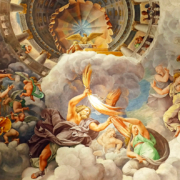
Mozart entered this symphony in his more or less regularly updated catalogue of works in 1788, under the title Symphony with Final Fugue. The word Jupiter first appears in writing in a concert calendar of 1821. The naming is quite apt, because it is rightly felt by us listeners that Mozart gained admission to Olympus with this work. The first movement of the work is a typical dialogue with the gods: an unambiguous declarative mode juxtaposed with a series of questions coming straight from the heart. This dichotomy is also found, in an unusual way, in the second movement. The third movement is one of the last real minuets in the history of music. Finally, the fourth movement is based on an enigmatic theme that has very many occurrences in music history, but is also known as Mozart’s signature motif. The end of the movement is a special compositional feat, with a short fugue that unfolds not from a single theme, but by the superimposing of all the musical materials contained in the piece.

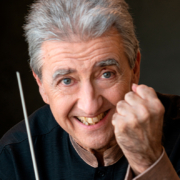
Presented and conducted by: Gábor Hollerung


14:30 Family Concert

Conducted by: Gábor Hollerung


16:00 Workshop – Solti Hall

(Talking to people from the arts)


18:00

Great Hall

BDO Big Band

Ferenc Csatos, Attila Monoki, Antal Nagy, Csaba Puskás – trumpet

András Sütő, Péter Pálinkás, Olivér Gáspár, Gábor Hegyi – trombone

Bence Szepesi, Marcell Horváth, Keve Ablonczy, Viktor Nagy, Dániel Mester – clarinet, saxophone

Gyula Lázár – double bass

Zsolt Nagy – drums

József Csikós – piano

guests: Lilla Polyák and Bálint Gájer


20:00 Evening concert – Great Hall

EVENING MAGIC

Camille Saint-Saëns: Danse macabre
Richard Strauss: Till Eulenspiegel’s Merry Pranks
Paul Dukas: The Sorcerer’s Apprentice
John Williams: Harry Potter – 2 movements from the suite

Conducted by: Guido Mancusi

The BDO Day ends with a magical evening programme. For the concert, our orchestra’s principal guest conductor Guido Mancusi has selected works that are in some way connected to magic.

 Based on a ballad by Goethe, in Dukas‘s symphonic poem the sorcerer’s little apprentice, in the absence of his master, enchants the broom to do his chores for him as an obedient servant. So far so good, but the spell is so successful that the broom takes on a life of its own, unleashing itself and becoming independent. The apprentice tries in vain to stop it with magic and force, and is finally forced to chop it to pieces with an axe. But then – like in a horror film – the broom pieces come to life one by one and continue their wild rampage. The master returns home just in the nick of time, and with a simple magic spell, puts an end to the mayhem.

Saint-Saëns’ Danse Macabre is very much like a real black mass. We hear the clock strike midnight, Satan appears, tunes up his violin and then begins a devilish dance that becomes more and more bloodcurdling, more and more captivating, and seems to go on unstoppably until the cock crows. Finally, as the dawn breaks, the devilish dance subsides.

The adventures of Till Eulenspiegel, the mischievous prankster of the bourgeoisie, are brought to life in Strauss’s symphonic poem, which faithfully follows our hero’s journey through his adventures up until his capture, conviction and then the gallows. The music faithfully follows his final jerks on the gallows, but the subsequent playing of the Till motif poses the question: was the hanging really successful?
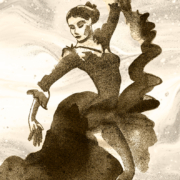

Julian Rachlin and the Budafok Dohnanyi Orchestra

Awaiting the audience this time is yet another special concert by the Budafok Dohnanyi Orchestra. Their world-famous guest artist for the evening, Julian Rachlin, will perform Mozart’s Violin Concerto No. 3 in G major. Although both of the other pieces on the programme are well-known musical works, they still have surprises to offer.

In Haydn’s oeuvre, cyclicality and the progression of the movements, do not yet necessarily entail an organic relationship, as we have grown accustomed to in Romanticism since Beethoven. It is thus an imaginary Haydn symphony – compiled by Gábor Hollerung – that we will hear this evening: although each of its movements comes from a different symphony, it seems as if this is exactly the way Haydn intended to write it. Bizet’s Carmen is one of the most popular works in the opera literature, and the orchestral suites created from it are also audience favourites. Rodion Shchedrin’s arrangement is the most exciting of these. He wrote ballet music from Carmen for his wife, the renowned Maya Plisetskaya. The work is written for unique orchestral forces, awarding a major role to an unusually large group of percussion instruments along with the strings. Also making the arrangement unique is the fact that Shchedrin deals freely with the music of Carmen in terms of both its orchestration and its dramaturgy, relying on the memory of well-known melodies jangling in the listener’s ears to make us think we hear several melodies we recognise from the piece that are not actually played. It will not be a dance company that is featured at this performance, but rather Ferenc Cakó, who will relate a story of his own creation using his astonishing sand animation technique.

Korngold-Shakespeare: Much Ado About Nothing

The name Erich Wolfgang Korngold (1897-1957) is not an unfamiliar one to the BDO’s audience. His incredibly rich oeuvre encompasses nearly every genre, from art songs to concertos and opera. Nevertheless, he is known to most of us as one of the greatest Hollywood composers of the era, whose genius was recognised by the film industry of the time with two Oscars.

Indeed, Korngold always thought in terms of theatre, cinema, scenes and characters. This is why we felt his works were the perfect complement to Shakespeare’s opulent comedy. This performance features not only excerpts from the incidental music he composed for Much Ado About Nothing, but also ones from his Violin Concerto and other shorter works. In putting together the production, Gábor Hollerung freely selected the musical passages from the composer’s extensive oeuvre that best support the scenes in the play. The aim was to create a performance that actually required the orchestra and the actors to interact with each other dramatically. Sometimes the orchestra “comments” on the events on stage, or “shares its opinion” about the actions and/or traits of the characters – all using the tools of music, of course. Korngold proved to be the perfect partner for this, as he liked to employ leitmotifs to portray characters, allowing him to immediately impress key traits in the audience’s mind. In order to prevent the performance from running late into the night, the creative team were forced – in a slightly sacrilegious fashion – to greatly abridge Shakespeare’s masterpiece, although of course without harming the play’s dramaturgy. This solution allows the music more space, giving rise to almost a new kind of symphonic theatre.

Partner: National Theatre of Szeged

MUSICPLUS SERIES 22-23/2 – The dramatic and playful love

Stravinsky started writing the ballet Pulcinella at the encouragement of Sergei Diaghilev, the founder and director of the Ballets Russes in Paris, who persuaded the composer to adapt Giovanni Battista Pergolesi’s music into a ballet for the early 18th-century commedia dell’arte story. Since then, musicologists have determined that some of the original music was not in fact written by Pergolesi, but presumably by other, lesser-known Italian Baroque composers. The story of Pulcinella’s love affairs, set in Naples, is a true comedy, full of elements of the commedia dell’arte, the core characters of Italian improvised theatre. The movements of the work are alternately humorous, lyrical and mock-romantic, focusing on the various tricks played by the Neapolitan maidens attempting to entice the sly Pulcinella with their seductive dances.
Perhaps Ravel’s longest and most passionate work, Daphnis et Chloé, was also commissioned by Diaghilev and was premièred in 1912. Its vast orchestral forces and sprawling harmonies help to illustrate the extreme emotions and the vividly imagined recounting of the ancient Greek love story. Out of this sumptuous impressionist symphonic work, Ravel also created two orchestral suites, which are often played on concert stages. Between the two ballet music pieces, we will also get to hear Klangfiguren für Orchester (“Sound Shapes for Orchestra”), a composition written by the conductor for the evening, Guido Mancusi. The title refers to the playfulness of the music, orchestration, and melodies, with the dance of the different harmonies leading the listener from one dance world to another.

ZENEPLUSZ BÉRLET 22-23/1 – Dvořák: Stabat mater

Dvořák’s Stabat Mater is both one of the composer’s most significant works as well as being a remarkable – and unique in many respects – part of the Romantic oratorio repertoire.

Music historians usually associate the writing of the piece with the loss of his child, and he also lost two other children while composing the work. The Stabat Mater can also be considered one of the outstanding works of Christian culture, because even while communicating endless pain, it finally goes on to express faith in life. The unique value of the piece lies in how, despite the extraordinary emotional profundities, it is always organised into well-disciplined and clearly framed movements, which in their structure, dramaturgy, and relationship to each other show an incredible number of faces of pain. Framing the work are the opening and closing movements. The opening movement is genesis-type music, which can be interpreted as the birth of pain. The beginning of the final movement is a reprise of the first movement. The other movements are mostly march-like in character: the Eia Mater is a funeral march, while the Fac me vere for male choir and tenor soloist is likewise a military march. The most beautiful movement in the piece, the Inflammatus et accensus, written for an alto soloist, is monotone march music conveying the act of moving in place The choral movement that closes the first half of the piece, the Tui nati, is a real rocker. Naturally, not even Dvořák was immune from the influence of Italian opera. The Quis est homo movement is a characteristically operatic quartet incorporating a collision of different types of musical material. A similarly operatic moment is the desperate and pained aria of the bass soloist, with what sounds like a heavenly choir singing from behind the scenes. Supplementing this performance of the Stabat Mater will be projections of both the text and artworks related to the theme of the work.

COMPREHENSIBLE MUSIC 22-23/5 – THE PLANETS OF THE SOUL

Gustav Holst’s The Planets is one of the emblematic works of the 20th century and one of the strongest examples for modern film music. Each movement is named after a planet and a mythological deity. In the title of each movement, Holst identifies a certain type of human quality or a characteristic of the human condition, a human emotion, experience or character. Five of the work’s seven movements will be performed in concert. Holst himself draws heavily on the mechanisms of the symphonic poem, but there is also a clear descriptive characterisation of the movements. Almost all movements are self-contained, closed tracks. One of the most famous parts of the work is the opening movement (Mars, the Bringer of War), the musical character of which is almost entirely echoed in John Williams’ Star Wars.

In the first half of the concert, Gábor Hollerung will offer an analysis of the piece in Hungarian. After the interval, the complete work will be performed without interruption.

COMPREHENSIBLE MUSIC 22-23/4 – ROSSINI, THE FIRST ROCKER

‘Dear Lord, here it is finished, this poor little mass. Have I just written sacred music, or rather, sacrilegious music?  I was born for opera buffa, as you well know. Not much technique, a little bit of heart, that’s all. Blessings to you and grant me Paradise.’ (Gioachino Rossini, Passy, 1863)

Rossini‘s work is, after all, unique in his oeuvre, both in terms of the performing apparatus and the scope and musical content of the work. It certainly reveals the author’s operatic vein, not only in the arias, but also in the soloist and choral responses in the Agnus Dei movement, for example, but also in the author’s intention to stand before the Lord as a poeta doctus (a scholar-artist), who is a master of one of the most difficult musical forms, the fugue. And although the Romantic period tends to approach this work from an emotional point of view, one cannot fail to notice the monotonous rhythmic formulae of Rossini’s comic operas, the mechanisms of playing with rhythms and weights, in which we, the people of the late 20th and early 21st centuries, can ultimately discover the basic formulas of popular music, including jazz and rock.

COMPREHENSIBLE MUSIC 22-23/3 – BRILLIANT FREEDOM

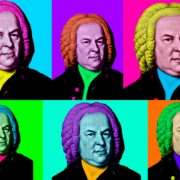
Many of Bach’s works are incomprehensible and inimitable examples of composerly virtuosity. One of these works is the Goldberg Variations. The variation is one of the freest genres in the history of music, capable of creating a multitude of characters and emotions taking a simple musical idea as their point of departure. Bach’s work is no different, but constructed with an incredibly consistent logic, coupled with the composer’s bravura of polyphony.

What makes this performance really special is that a transcription for two pianos by two German composers, Josef Rheinberger and Max Reger will be performed, which is worthy of the original work in every respect, both because of the freedom of variation and because every note that is played – and was not written by Bach – would surely have been to the delight and satisfaction of Bach, too.

In the first half of the concert, Gábor Hollerung will offer an analysis of the piece in Hungarian. After the interval, the complete work will be performed without interruption.

COMPREHENSIBLE MUSIC 22-23/2 – A TWISTED MIRROR TO THE WORLD

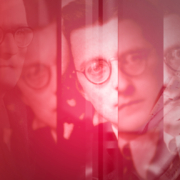
In 1944, in response to a journalist’s question, Shostakovich said that he was looking for a suitable text for his Symphony No. 9, a large-scale work for chorus and orchestra. The information took on a life of its own, and the rumour started to spread that the composer was going to dedicate this work to the ‘great victory of the Soviet Union’. Although Shostakovich did attempt to write the choral work of the type, his sketches were abandoned in favour of a completely new work, the première of which became one of the biggest scandals in the Soviet music scene. Instead of the glorious music that everyone had been waiting for with much pathos, the audience was treated to a grotesque, almost parody tune, a light-hearted piece of music in which nothing could be taken seriously. Although the performance caused a great scandal in its day, in today’s terms it is one of Shostakovich’s most important symphonies – and one of the most popular pieces in concert halls. With great taste and restraint, the work holds up a twisted mirror to the world, whereby the composer reaches back to the classical tradition, recalling the emblematic gesture: if we cannot laugh at the world, we should at least show it the fig.

In the first half of the concert, Gábor Hollerung will offer an analysis of the piece in Hungarian. After the interval, the complete work will be performed without interruption.

COMPREHENSIBLE MUSIC 22-23/1 – DIALOGUE WITH THE GODS

Mozart entered this symphony in his more or less regularly updated catalogue of works in 1788, under the title Symphony with Final Fugue. The word Jupiter first appears in writing in a concert calendar of 1821. The naming is quite apt, because it is rightly felt by us listeners that Mozart gained admission to Olympus with this work. The first movement of the work is a typical dialogue with the gods: an unambiguous declarative mode juxtaposed with a series of questions coming straight from the heart. This dichotomy is also found, in an unusual way, in the second movement. The third movement is one of the last real minuets in the history of music. Finally, the fourth movement is based on an enigmatic theme that has very many occurrences in music history, but is also known as Mozart’s signature motif. The end of the movement is a special compositional feat, with a short fugue that unfolds not from a single theme, but by the superimposing of all the musical materials contained in the piece.